5 Proven Ways to Get Your Business Found Online

In today's digital-first world, your business's online presence is just as important as the quality of your products or services. Whether you run a local bakery, a consulting firm, or an e-commerce store, potential customers are searching for what you offer — often right now. The question is: can they find you?
If you're struggling with online visibility, you're not alone. But the good news is that improving how your business appears online doesn't have to be overwhelming. Here are five proven strategies that will help you get found by the right people at the right time.
1. Build a Professional, High-Performing Website
Your website is your digital storefront — and first impressions matter. A fast, well-designed, and mobile-friendly website is the cornerstone of your entire online presence. Without one, every other marketing effort you make is essentially pointing people to a dead end.
When building or redesigning your website, consider both aesthetics and functionality. A clean layout, intuitive navigation, and a clear call-to-action can dramatically increase the time visitors spend on your site — and the likelihood that they convert into paying customers.
Choosing the right technology stack for your website is just as important as defining its features. Ruby on Rails (RoR) remains a widely adopted, battle-tested web development framework known for its balance of development speed, built-in security practices, and long-term scalability. For growing teams, ROR development for small businesses creates a structured and maintainable foundation without the overhead often associated with enterprise-heavy platforms.
At the same time, it’s worth considering other modern frameworks depending on your project requirements. Django (Python) is valued for its strong security defaults and clean architecture, while Laravel (PHP) provides an elegant syntax and a rich ecosystem for rapid application development. For JavaScript-driven projects, Node.js frameworks like Express or NestJS enable high-performance, real-time applications. ASP.NET Core is often chosen for enterprise-grade solutions within the Microsoft ecosystem, and Spring Boot (Java) supports scalable backend systems for complex applications.
Ultimately, the right framework depends on factors such as team expertise, scalability goals, performance needs, and long-term maintenance strategy.
Key elements every business website should have:
- A clear homepage that communicates what you do and who you serve within seconds
- Contact information that's easy to find, including a phone number and address if applicable
- Mobile responsiveness — over 60% of web traffic now comes from smartphones
- Fast loading speeds (aim for under 3 seconds to avoid high bounce rates)
- An SSL certificate (https://) to signal trust to both visitors and search engines
- A blog or resources section to attract organic traffic through helpful content
2. Invest in Search Engine Optimization (SEO)
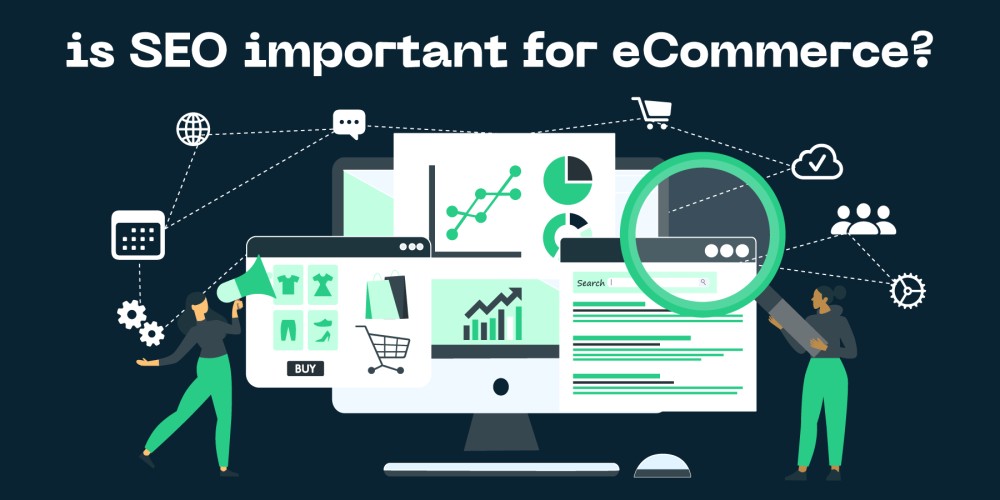
Search Engine Optimization (SEO) is the process of improving your website so it ranks higher in search engine results pages (SERPs) like Google. When done right, SEO drives a steady stream of free, organic traffic to your site from people who are actively looking for what you offer.
SEO encompasses several disciplines that work together to signal authority and relevance to search engines.
On-Page SEO
This involves optimizing the content on your website itself. Start with thorough keyword research to find the terms your target customers are searching for. Then, naturally incorporate those keywords into your page titles, meta descriptions, headings, image alt text, and body content. Every page should have a clear purpose and target a specific keyword or topic cluster.
Technical SEO
Technical SEO ensures search engine crawlers can efficiently find, understand, and index your site. This includes improving site speed, fixing broken links, creating an XML sitemap, using structured data (Schema markup), and ensuring your site architecture is logical. A technically sound website gives all your other SEO efforts the best possible chance to succeed.
Local SEO
If you serve a local audience, local SEO is non-negotiable. Claim and fully optimize your Google Business Profile with accurate information, photos, business hours, and service categories. Encourage satisfied customers to leave Google reviews, and ensure your Name, Address, and Phone number (NAP) are consistent across all online directories. Local SEO can significantly boost your visibility for location-based searches like "coffee shop near me" or "plumber in [city]."
Off-Page SEO & Link Building
Google views links from other reputable websites to yours as votes of confidence. The more high-quality backlinks you earn, the more authoritative your site appears. Pursue backlinks by creating genuinely useful content, reaching out to industry publications, getting listed in relevant directories, and building genuine relationships with other businesses in your niche.
3. Leverage Social Media to Build Your Brand
Social media platforms are where billions of people spend their time — and where your next customer might discover your business. A consistent, strategic social media presence helps you build brand awareness, connect with your audience, and drive traffic back to your website.
The key is to choose platforms wisely. You don't need to be everywhere — you need to be where your audience is. B2B businesses typically thrive on LinkedIn, while product-based businesses often find their community on Instagram, TikTok, or Pinterest. Service businesses and restaurants do well on Facebook, while professional content creators gain traction on YouTube or X (formerly Twitter).
Tips for an effective social media strategy:
- Post consistently — even 3 times per week is better than sporadic bursts of activity
- Mix content types: educational posts, behind-the-scenes content, customer testimonials, and promotional offers
- Use hashtags strategically to increase the discoverability of your posts
- Engage with comments and messages promptly to build trust and community
- Collaborate with micro-influencers in your niche for affordable, targeted exposure
- Use social media Stories and Reels — short-form video generates significantly higher engagement than static posts
Remember: social media is a conversation, not a broadcast. The businesses that win on social media are the ones that show up authentically, respond to their community, and provide genuine value — not just constant sales pitches.
4. Claim and Optimize Your Business Listings
Online business listings are one of the fastest ways to improve your local and organic visibility with minimal ongoing effort. When your business information appears consistently and accurately across the web, search engines gain confidence that you are a legitimate, trustworthy business — and they reward you with better rankings.
Start with the most impactful platforms: your Google Business Profile is arguably the single most valuable free tool available to any business owner. When optimized properly, it places your business directly in Google Search and Google Maps results for relevant local searches — including a star rating, reviews, photos, and a link to your website.
Other important directories to claim your listing on:
- Yelp — especially important for restaurants, retail, and service businesses
- Bing Places for Business — often overlooked, but Bing still commands a significant share of search traffic
- Apple Maps — essential for reaching iPhone users
- Facebook Business Page — doubles as both a social platform and a local directory
- Industry-specific directories relevant to your niche (e.g., Houzz for contractors, Healthgrades for medical professionals)
Crucially, ensure your business name, address, and phone number are identical across every listing. Even small inconsistencies — like "St." vs. "Street" — can confuse search engines and dilute your local SEO efforts.
5. Create Valuable Content That Attracts and Educates
Content marketing is one of the most sustainable, cost-effective strategies for long-term online visibility. By consistently publishing helpful, informative content that answers the questions your target audience is asking, you position your business as an authority in your field — and you give search engines a steady stream of relevant material to index and rank.
Content marketing takes many forms. A well-maintained blog is perhaps the most common starting point — and for good reason. Blog posts that address specific customer pain points, explain your services, or offer "how-to" guidance can attract organic search traffic for months or even years after they are published.
But content doesn't stop at blogging. Consider diversifying into:
- Video content — tutorials, product demos, and customer testimonials perform exceptionally well on YouTube and social media
- Podcasts — a growing medium that lets you reach audiences during their commute, workouts, or daily routines
- Infographics — shareable visual content that earns backlinks and social shares
- Email newsletters — a powerful way to stay top-of-mind with existing customers and nurture leads over time
- Case studies and whitepapers — ideal for B2B businesses looking to demonstrate expertise and credibility
The most important rule in content marketing is to prioritize quality over quantity. One deeply researched, genuinely useful article will outperform ten thin, superficial posts every time — both in search rankings and in building customer trust.
Final Thoughts: Consistency Is Your Competitive Advantage
Improving your online visibility isn't a one-time project — it's an ongoing commitment. The businesses that consistently show up online, engage with their audiences, and refine their digital strategy over time are the ones that build lasting advantages over their competitors.
Start with the foundations: build a professional website, optimize it for search engines, establish your presence on the right social media platforms, claim your business listings, and commit to creating content that genuinely helps your customers. Then, keep going.
The internet rewards persistence. The businesses that treat online visibility as a long-term investment — not a quick fix — are the ones that ultimately get found, get remembered, and get chosen.