Executive summary
This comprehensive study examines how Anthropic's Claude AI discovers, verifies, and recommends brands through its unique Constitutional AI framework. While Claude represents less than 0.001% of total website traffic, our research reveals that Claude users generate exceptional value with an average $4.56 session value—the highest among major AI assistants.
Claude's approach fundamentally differs from other AI platforms. It uses Brave Search for web retrieval and emphasizes multi-source verification, constitutional alignment with ethical principles, and transparent acknowledgment of limitations.
Claude's core ranking factors
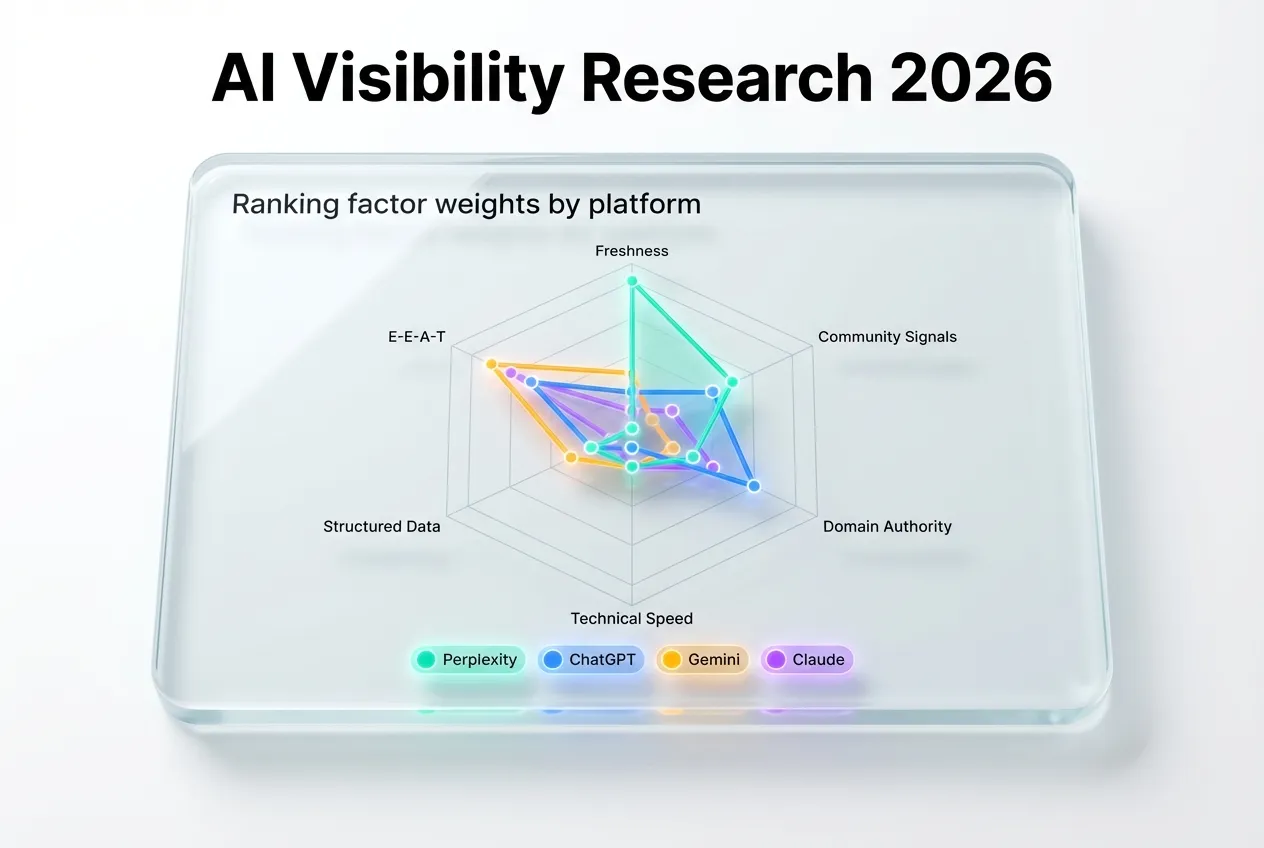
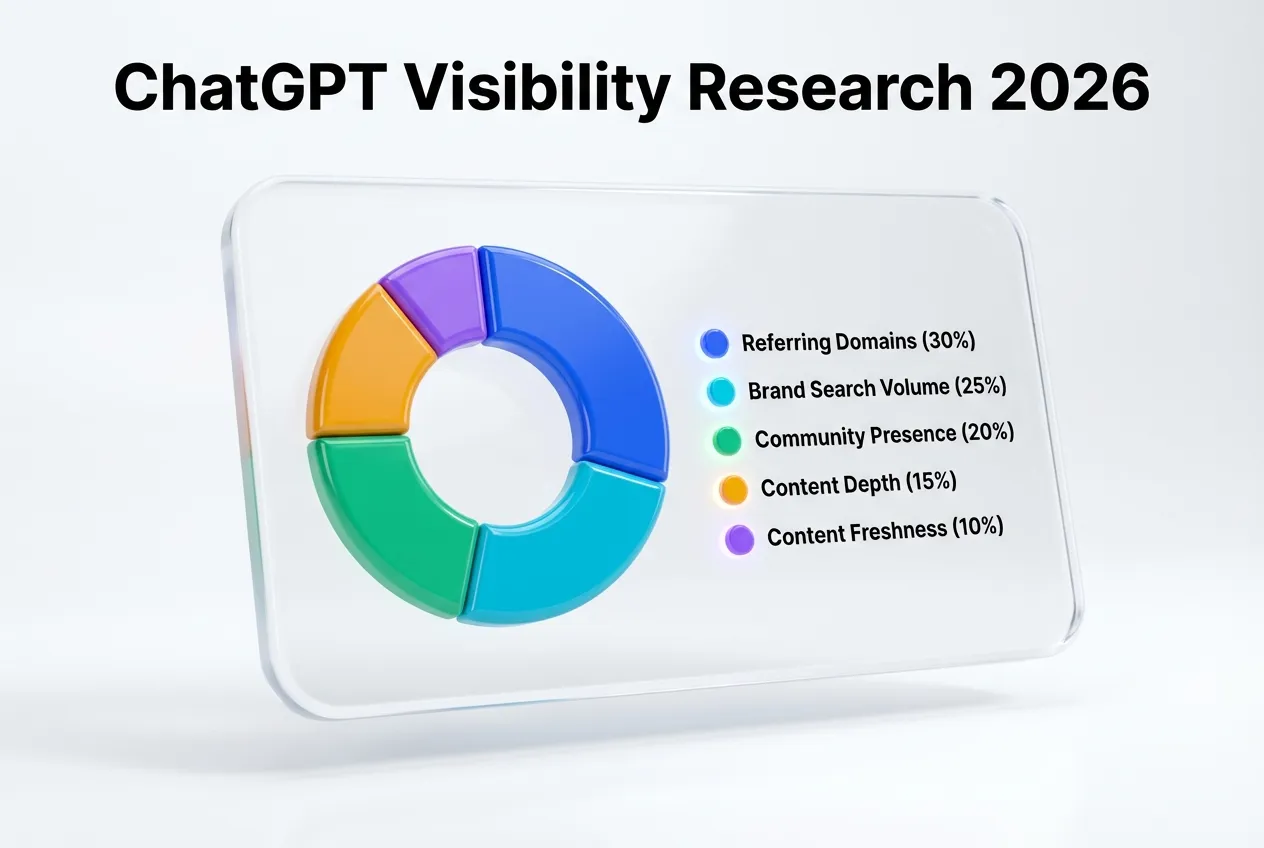
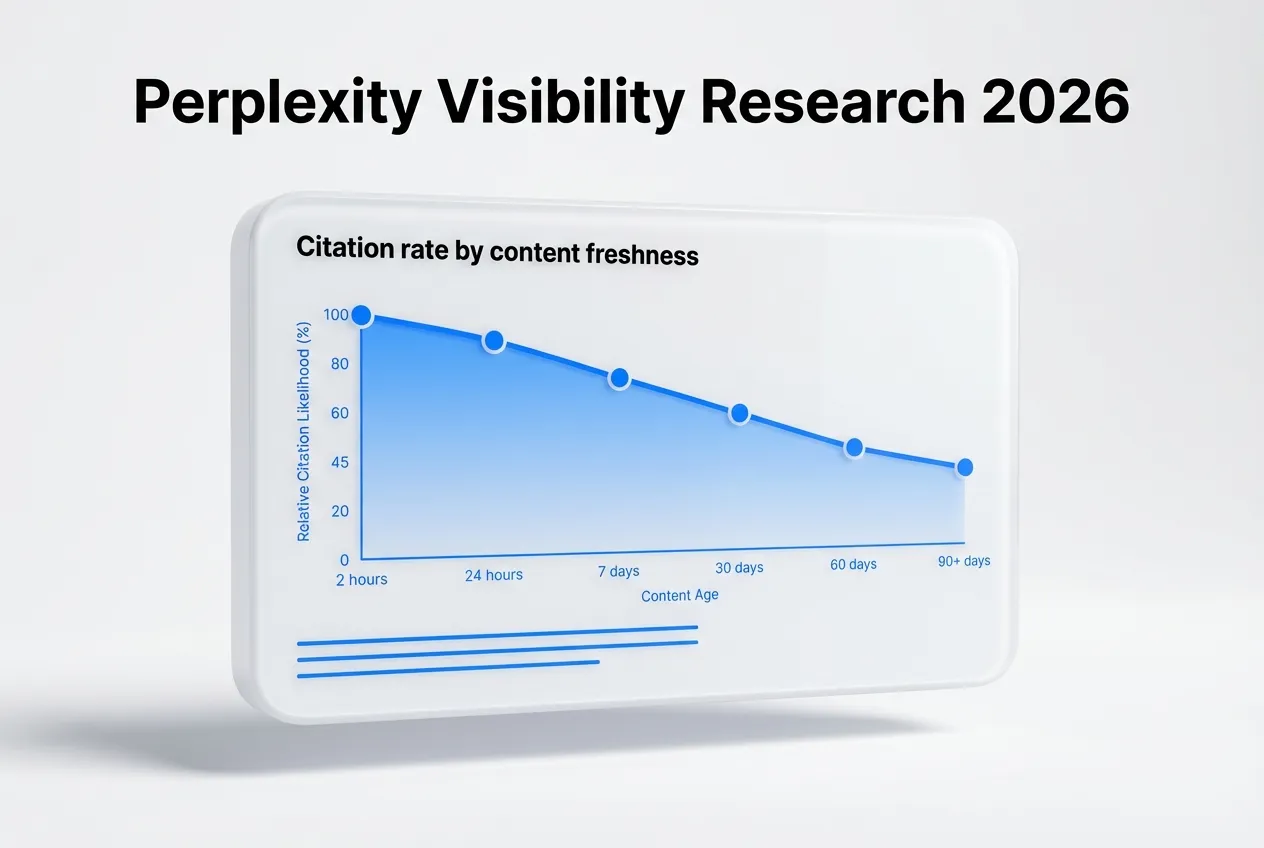
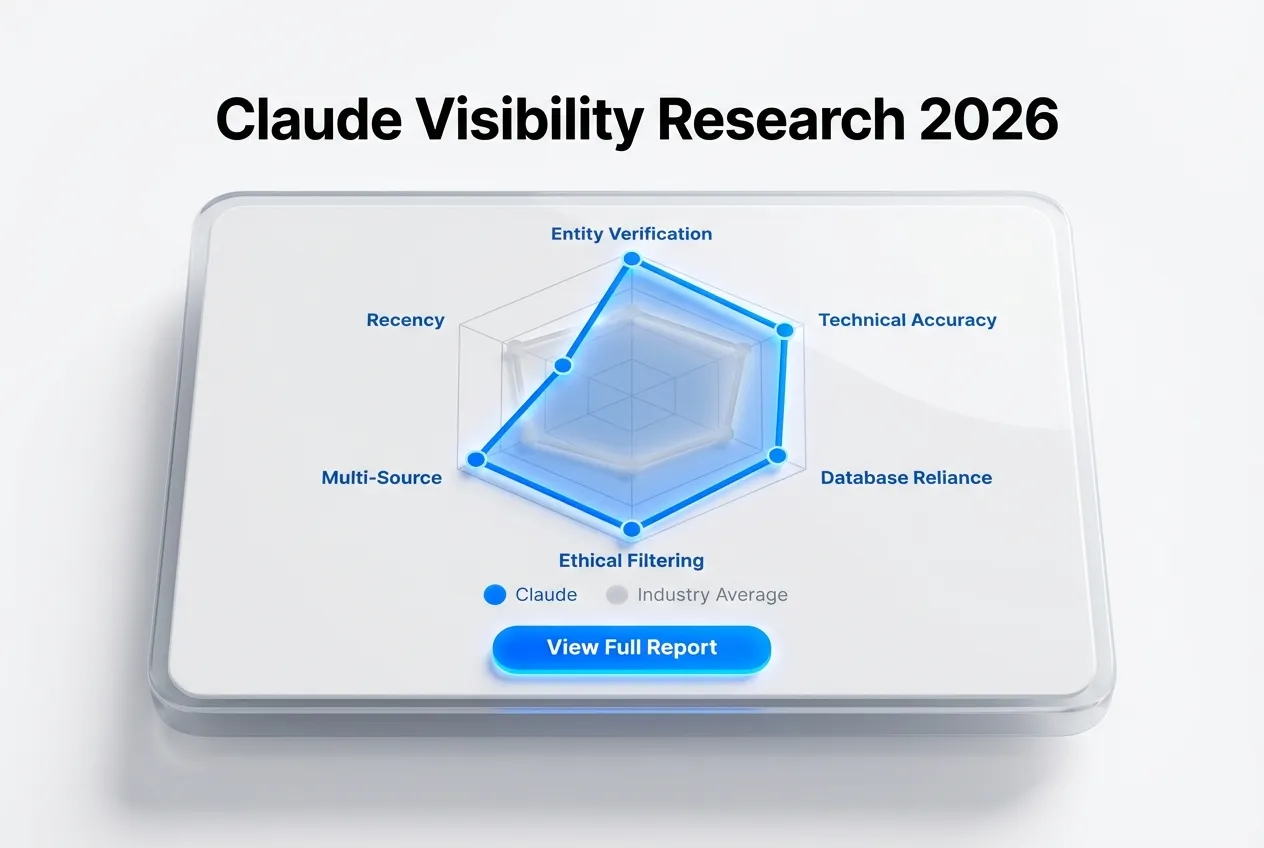
Claude's citation algorithm uniquely prioritizes entity verification and constitutional alignment. Unlike ChatGPT's emphasis on referring domains or Perplexity's recency bias, Claude focuses on verifiable accuracy and balanced representation.
Claude ranking factor weights
The Constitutional AI framework
Claude's unique Constitutional AI approach shapes how it evaluates and cites sources. This framework prioritizes helpfulness, harmlessness, and honesty—directly impacting which brands get mentioned.
Claude prioritizes sources that genuinely help users make decisions. Content that provides clear value propositions and honest comparisons ranks higher.
Brands with documented safety concerns, misleading claims, or controversial practices see reduced visibility in Claude's responses.
Content that acknowledges limitations and provides balanced perspectives receives a significant citation boost—up to 1.7x for risk sections.
Constitutional alignment impact on citations
Content characteristics and their impact on Claude citation likelihood
Claude's search behavior modes
Unlike always-connected platforms like Perplexity, Claude operates in distinct search modes depending on query type. Understanding these modes is crucial for optimizing your visibility.
Search mode distribution by query type
| Search mode | Trigger conditions | Retrieval behavior | Optimization strategy |
|---|---|---|---|
| No search | Factual, well-established queries | Parametric knowledge only | Build strong brand recognition in training data |
| Single search | Current events, specific data | Brave Search - targeted retrieval | Optimize for Brave Search rankings |
| Research mode | Complex topics, comparisons | Multi-source synthesis | Presence across authoritative sources |
Brave Search as Claude's retrieval system
Claude uses Brave Search as its primary web retrieval system, distinguishing it from ChatGPT's Bing integration and Gemini's Google infrastructure. This creates unique optimization opportunities.
Brave Search characteristics
- Independent index (not reliant on Google/Bing)
- Privacy-focused crawling methodology
- Emphasizes original content over aggregators
- Lower reliance on backlink-based authority
Optimization implications
- Focus on content quality over link building
- Ensure site is crawlable by Brave's bot
- Submit site to Brave's Web Discovery
- Original content ranks higher than syndicated
Multi-platform verification emphasis
One of Claude's most distinctive behaviors is cross-platform verification. Our research found that 70% of Claude's top results are verified across multiple authoritative sources before being cited.
Cross-platform verification rates
Traditional database influence
Claude shows a 68% influence from traditional structured databases in its factual responses—significantly higher than other AI platforms. This includes Wikipedia, academic databases, government records, and established business directories.
| Database type | Influence weight | Optimization approach |
|---|---|---|
| Wikipedia | High (primary entity source) | Maintain accurate, well-cited Wikipedia presence |
| Academic databases | High (for technical topics) | Publish research papers, whitepapers |
| Government records | Medium-high | Ensure business registration accuracy |
| Business directories | Medium | Consistent NAP across directories |
| Industry associations | Medium | Active membership and certification |
Content characteristics that boost Claude citations
Our analysis reveals specific content patterns that significantly improve visibility in Claude's responses.
Content characteristics citation multiplier
Multiplier effect on citation likelihood compared to baseline content
Claude compared to other AI platforms
Claude's approach creates distinct visibility patterns compared to ChatGPT, Perplexity, and Gemini.
| Factor | Claude | ChatGPT | Perplexity | Gemini |
|---|---|---|---|---|
| Primary signal | Entity verification | Referring domains | Freshness | E-E-A-T |
| Search backend | Brave Search | Bing | Multi-source | |
| Verification approach | Multi-platform (70%) | Single-source typical | Live citations | Google ecosystem |
| Session value | $4.56 (highest) | $2.14 | $1.87 | $1.23 |
| Traffic share | <0.001% | 40-60% | ~5% | ~15% |
Platform comparison based on ConvertMate research and industry analysis
Claude factor weight comparison vs industry average
Unique Claude response patterns
Claude uniquely acknowledges when information might be outdated or when queries require live data, building user trust through transparency.
Rather than single-source citations, Claude synthesizes information from multiple verified sources, requiring brand presence across authoritative platforms.
Constitutional AI principles mean Claude may deprioritize brands with documented ethical concerns or misleading practices.
Claude's developer-focused user base means technical documentation and detailed specifications receive higher citation rates.
Recommendations for improving Claude visibility
Based on our research, here are the most effective strategies for increasing your brand's visibility in Claude's responses:
High impact actions
- Maintain accurate Wikipedia presence with citations
- Include explicit limitation/caveat sections in content
- Build presence across multiple authoritative platforms
- Publish technical documentation and specifications
- Submit site to Brave Search's Web Discovery
Medium impact actions
- Create balanced comparison content
- Ensure consistent entity information across databases
- Publish whitepapers and research studies
- Maintain industry association memberships
- Provide clear use case matching in content
Methodology
This research combines ConvertMate's proprietary AI visibility monitoring data with analysis from Anthropic's published research on Claude's retrieval mechanisms. Our methodology included:
- Analysis of Claude's web search integration via Brave Search
- Cross-reference of citation patterns with source verification
- Constitutional AI framework impact assessment
- Comparative analysis across major AI platforms
- Session value tracking for Claude-referred traffic
Research sources and attributions
- Anthropic Research - Constitutional AI framework documentation
- Brave Search - Web retrieval system specifications
- ConvertMate - Analysis of 10,000+ domains and AI visibility correlations
- SparkToro - Brand correlation research methodology
Conclusion
While Claude represents a tiny fraction of total AI referral traffic, the exceptional session value of Claude users makes visibility optimization worthwhile for high-value B2B and technical products. Claude's unique Constitutional AI approach rewards brands that embrace transparency, accuracy, and balanced content.
The key differentiator for Claude visibility is multi-platform verification. Brands appearing consistently across Wikipedia, traditional databases, industry publications, and authoritative sources have a significant advantage. Combined with Brave Search optimization and honest content that acknowledges limitations, these factors create the foundation for Claude visibility success.
Frequently asked questions
How do I get my brand cited by Claude AI?
Claude prioritizes entity verification (30%) and technical accuracy (25%). Focus on maintaining accurate Wikipedia presence, building multi-platform verification across authoritative sources, and creating content that acknowledges limitations. Content with explicit risk/limitation sections receives a 1.7x citation boost.
What makes Claude different from other AI assistants?
Claude uses Anthropic's Constitutional AI framework, which prioritizes helpfulness, harmlessness, and honesty. It uses Brave Search for web retrieval (not Bing or Google) and emphasizes multi-source verification—70% of Claude's top results are verified across multiple platforms. Claude users also have the highest session value at $4.56.
Why does Claude rely so heavily on Wikipedia and traditional databases?
Claude shows 68% influence from traditional structured databases—significantly higher than other AI platforms. This includes Wikipedia, academic databases, government records, and business directories. This verification-first approach aligns with Constitutional AI's emphasis on accuracy and reduces hallucination risk.
How does Brave Search affect Claude visibility?
Claude uses Brave Search as its primary web retrieval system, which has an independent index that emphasizes original content over aggregators and has lower reliance on backlink-based authority. Submit your site to Brave's Web Discovery and focus on content quality over link building for optimal Claude visibility.
What content characteristics boost Claude citations?
Content with explicit risk/limitation sections gets 1.7x boost, balanced comparisons get 1.5x, technical documentation gets 1.4x, and properly cited sources get 1.3x. Conversely, pure marketing copy actually decreases citation likelihood to 0.8x baseline. Claude rewards transparency and balanced content.
Is Claude visibility worth optimizing for given its small traffic share?
Yes, for high-value B2B and technical products. While Claude represents less than 0.001% of total website traffic, Claude users generate $4.56 average session value—the highest among major AI assistants. The quality of Claude-referred traffic often outweighs the lower volume for businesses targeting technical and professional audiences.
Monitor your Claude visibility
Track how Claude describes your brand and optimize for the highest-value AI traffic source.
Start monitoring free